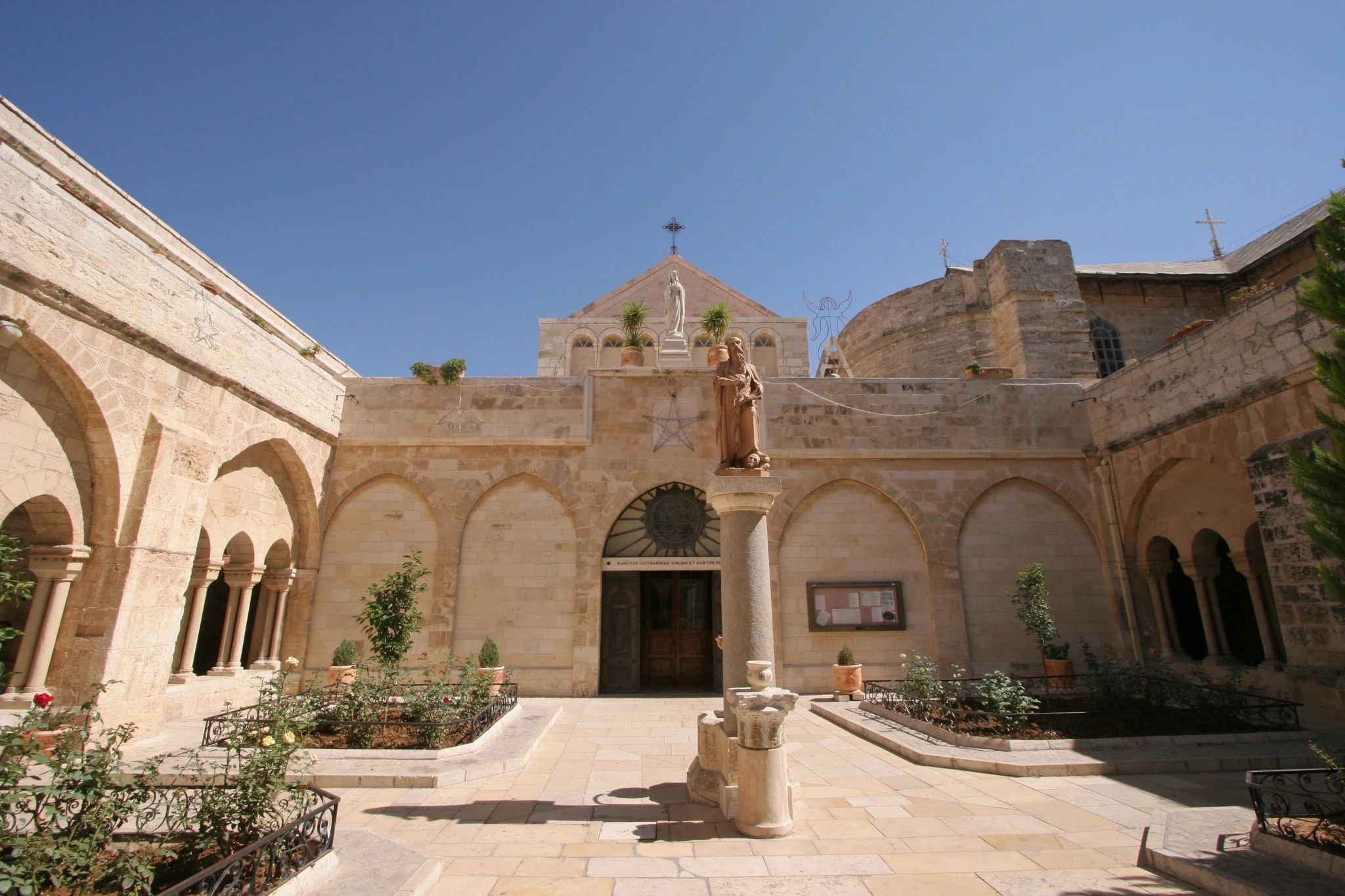
Jerusalem brings together, within a small geographic area, sites traditionally associated with the final days of Jesus's earthly ministry, his crucifixion, burial, Resurrection, Ascension, teaching, prayer, and encounters with his disciples. The Old City and its walls are a UNESCO World Heritage Site, and among its most important Christian monuments is the Church of the Holy Sepulchre (also called the Church of the Resurrection or Anastasis by many Eastern Christians) whose Resurrection Rotunda contains the tomb venerated by tradition as Jesus's burial place. A major church was built here under Constantine in the 4th century, and today's building holds Byzantine, Crusader, medieval, Ottoman, and modern layers, shared among Greek Orthodox, Roman Catholic, and Armenian Apostolic communities as principal custodians, with Coptic, Syriac, and Ethiopian communities also holding rights within or around the complex.
Nearby, chapels above the rock traditionally identified as Golgotha commemorate the crucifixion; the site's archaeological and historical setting (an ancient quarry and burial ground outside the period's city walls) lends real credibility to the tradition, though it can't establish the exact point the cross stood. The Via Dolorosa traces a traditional, centuries-developed devotional route of the 14 Stations of the Cross through the Old City's active streets, ending at the Holy Sepulchre. East of the Old City, the Mount of Olives, the Garden of Gethsemane, and the Church of All Nations are tied to Jesus's teaching, prayer, and arrest, while the Garden Tomb (significant to many Protestant and Evangelical pilgrims since the late 19th century) offers a different, contemplative setting; most historical and archaeological scholarship favors the Holy Sepulchre's older tradition, and the Garden Tomb's own custodians acknowledge that precise identification isn't the point of their ministry.
Jerusalem is also a modern, sometimes politically sensitive city, where access, transportation, and worship schedules can change, so pilgrims should pair spiritual preparation with current, practical travel planning.