✝ History, Faith & Archaeology
Why Fátima matters
A clear distinction between Christian tradition, documented history, and archaeological interpretation.
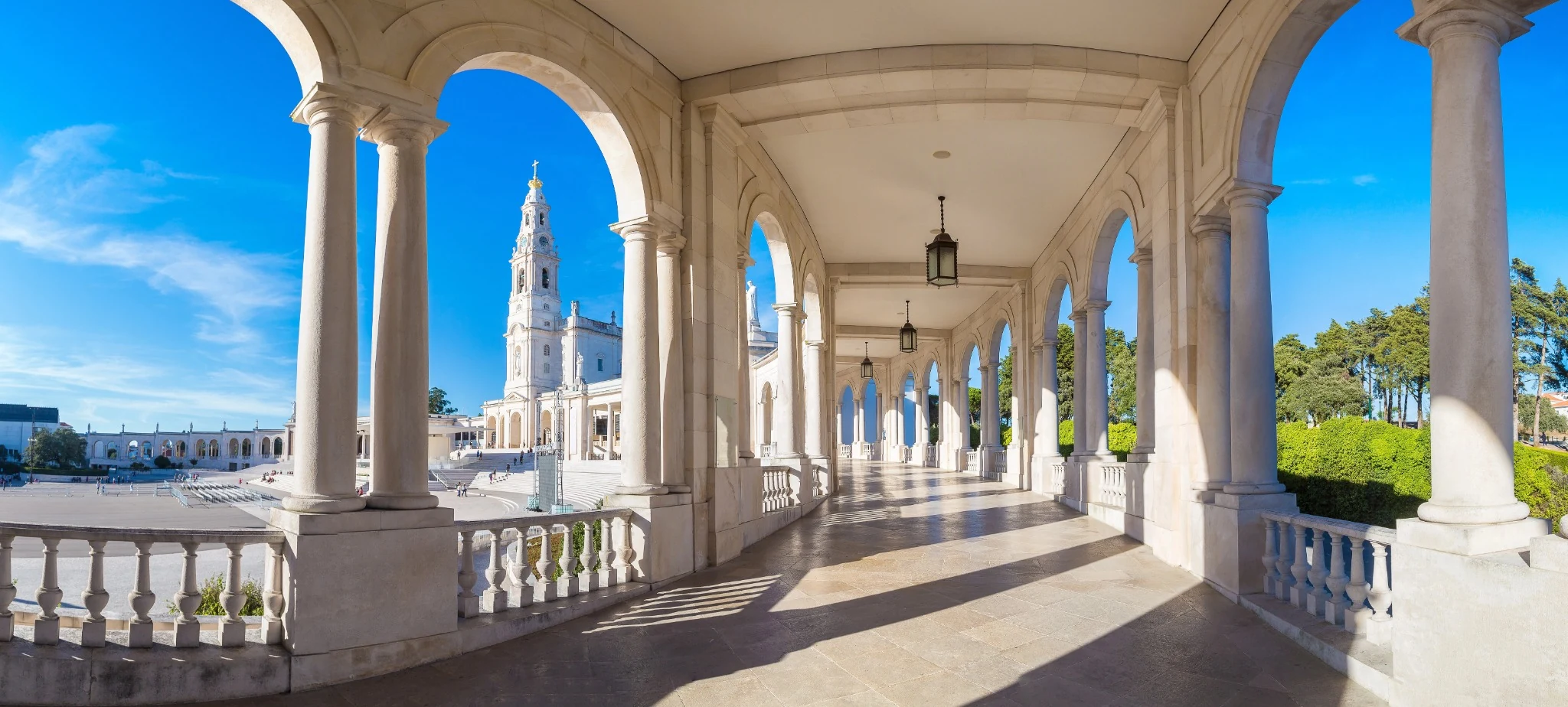
Fátima, on a limestone plateau in central Portugal, is one of the most influential Catholic pilgrimage destinations of the modern era, associated with a series of Marian apparitions reported in 1917 by three shepherd children, Lúcia dos Santos and her cousins Francisco and Jacinta Marto. According to their testimony, the apparitions took place at Cova da Iria between May and October 1917, with a message emphasizing prayer, conversion, penance, the Rosary, and peace amid a world affected by war. What had been a rural grazing area grew into an international sanctuary (in 2024 the shrine reported roughly 6.
2 million pilgrims) organized around a vast open prayer area between the historic Basilica of Our Lady of the Rosary and the large modern Basilica of the Most Holy Trinity. At its center, the Chapel of the Apparitions stands at the traditional site of the 1917 events; the exact physical point rests on religious tradition and continuous devotion rather than something archaeology can independently confirm. The Basilica of the Rosary holds the tombs of Francisco and Jacinta, canonized by Pope Francis in 2017, and of Lúcia, whose own cause for canonization remains under formal consideration by the Church.
Nearby, Aljustrel preserves the shepherd children's family homes, Valinhos is tied to the August 1917 apparition, and the Loca do Cabeço is associated with angelic apparitions the children reported in 1916, before the Marian apparitions of the following year. A genuine section of the Berlin Wall stands near the sanctuary, donated as a symbol of gratitude tied to Catholic interpretations of the Fátima message concerning Russia and peace, a religious interpretation rather than a demonstrated chain of political cause and effect.