Bethlehem, known in Hebrew as Beit Lehem, "House of Bread", sits in the hills roughly 10 km south of Jerusalem, and is the town traditionally associated with the birth of Jesus. It is also a living Palestinian city of churches, mosques, homes, schools, and markets, so a pilgrimage here brings biblical memory into contact with a complex contemporary reality. At its heart, the Church of the Nativity stands beside Manger Square, built above the grotto venerated for centuries as Jesus's birthplace; the church and its historic pilgrimage route are a UNESCO World Heritage Site, and Christian worship has continued there since at least the 4th century.
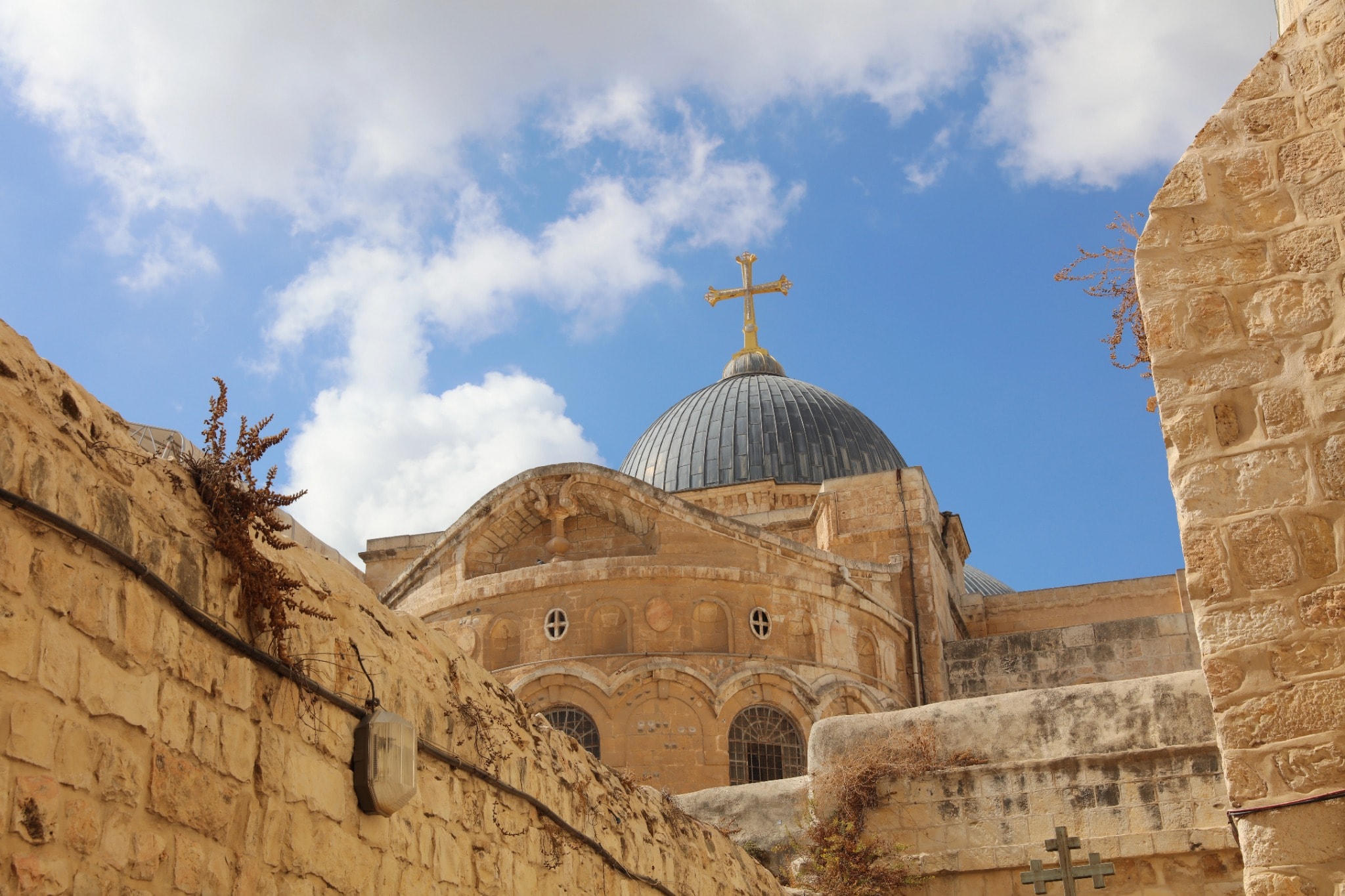
The first basilica was commissioned under Emperor Constantine and substantially rebuilt under Emperor Justinian in the 6th century, so today's building holds layers from several periods rather than being unchanged since antiquity. Visitors enter through the Door of Humility, a low stone entrance that requires most people to bend, historically reduced in size, though the exact date and reason for every modification aren't fully certain. Beneath the church, the Grotto of the Nativity is marked by a silver star beneath the Altar of the Nativity, inscribed "Hic de Virgine Maria Jesus Christus natus est" ("Here Jesus Christ was born of the Virgin Mary"), a mark of ancient and continuous devotion rather than an archaeologically provable exact point.
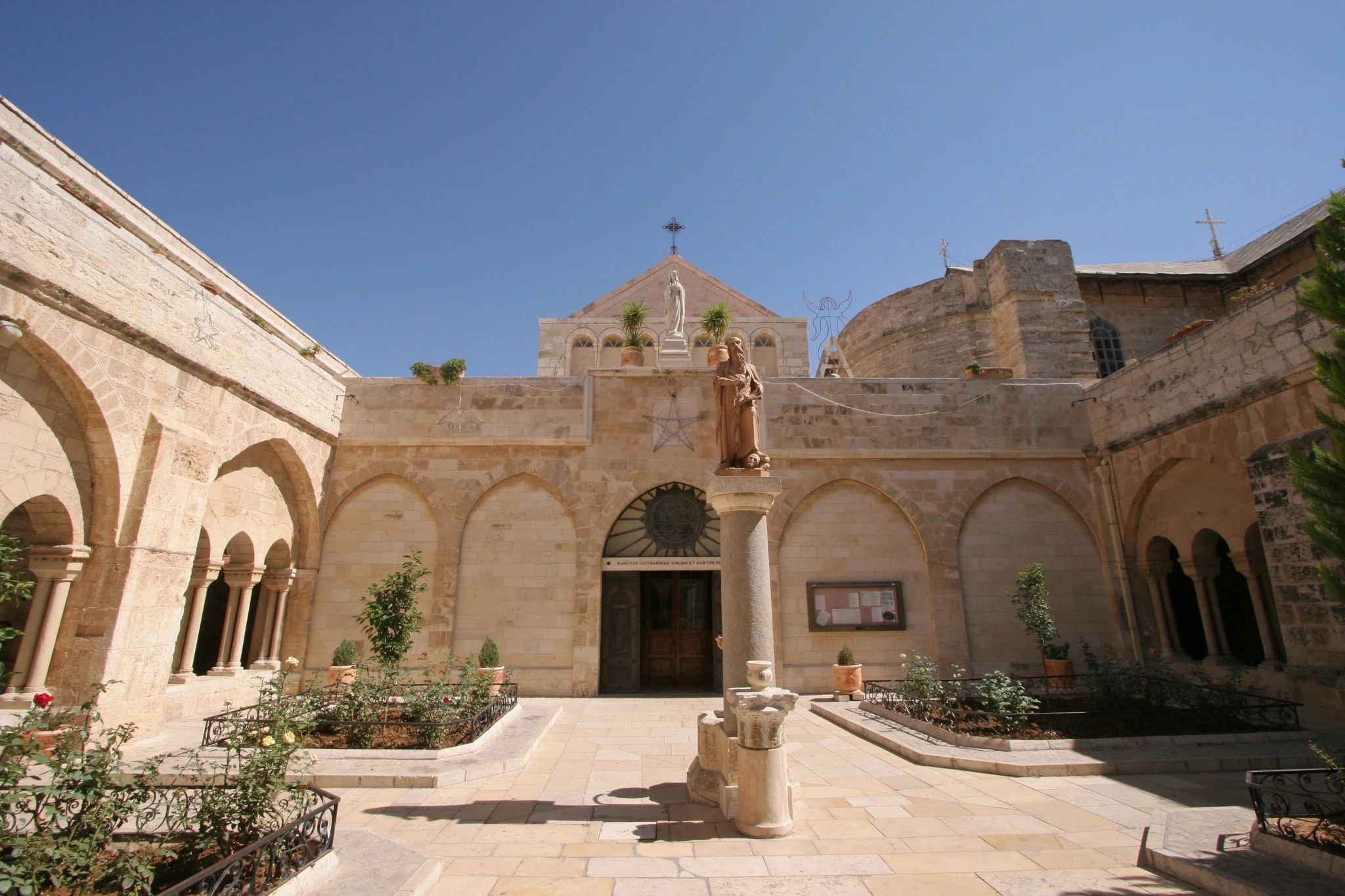
The adjoining Church of Saint Catherine serves the Roman Catholic community and hosts internationally broadcast Christmas services; beneath it, caves associated with Saint Jerome commemorate his work on the Latin Vulgate translation in the 4th–5th centuries. Nearby, the Milk Grotto is a Marian shrine tied to a devotional tradition, and east of the town, Beit Sahour's Shepherds' Field sites (Franciscan and Greek Orthodox) commemorate the angelic announcement to the shepherds, the Gospel text doesn't identify one precise field, so more than one commemorative site has developed over time.